The 34-inch barrier.
Standard public restroom sinks in the United States are mounted roughly 34 inches off the floor, a height set for adult use. That single measurement quietly excludes millions of people from washing their hands in public.
Who this affects.
Young children washing independently
Most children under eight cannot reach a standard sink without being held up or balancing on something unstable.
Little people and short-statured adults
Adults of short stature face this barrier every time they use a public restroom. Every day, in every building.
Caregivers who cannot lift
Parents using wheelchairs, parents with chronic pain, lifting restrictions, recent surgery, or who are pregnant cannot safely lift a child to a 34-inch sink. For these families, an inaccessible sink isn’t inconvenient. It makes handwashing impossible.
Accessibility standards cover wheelchair clearance beneath the sink, but they don't address the reach height required by small children, short-statured adults, or seated caregivers helping a child wash.
The ADA does an enormous amount of good. It is also incomplete. Universal design for handwashing requires a second, lower wash station, or a permanent, safe step that doesn’t disappear at the end of the morning shift.
Lower-height sinks and integrated step stools.
The fixes already exist and are widely used in school, museum, and children’s hospital restrooms: a second wash station mounted lower, or a permanently fixed step beneath a standard sink.
They’re affordable. They’re durable. They’re already approved by major plumbing and accessibility standards. What’s missing is the expectation that every public restroom should have one.
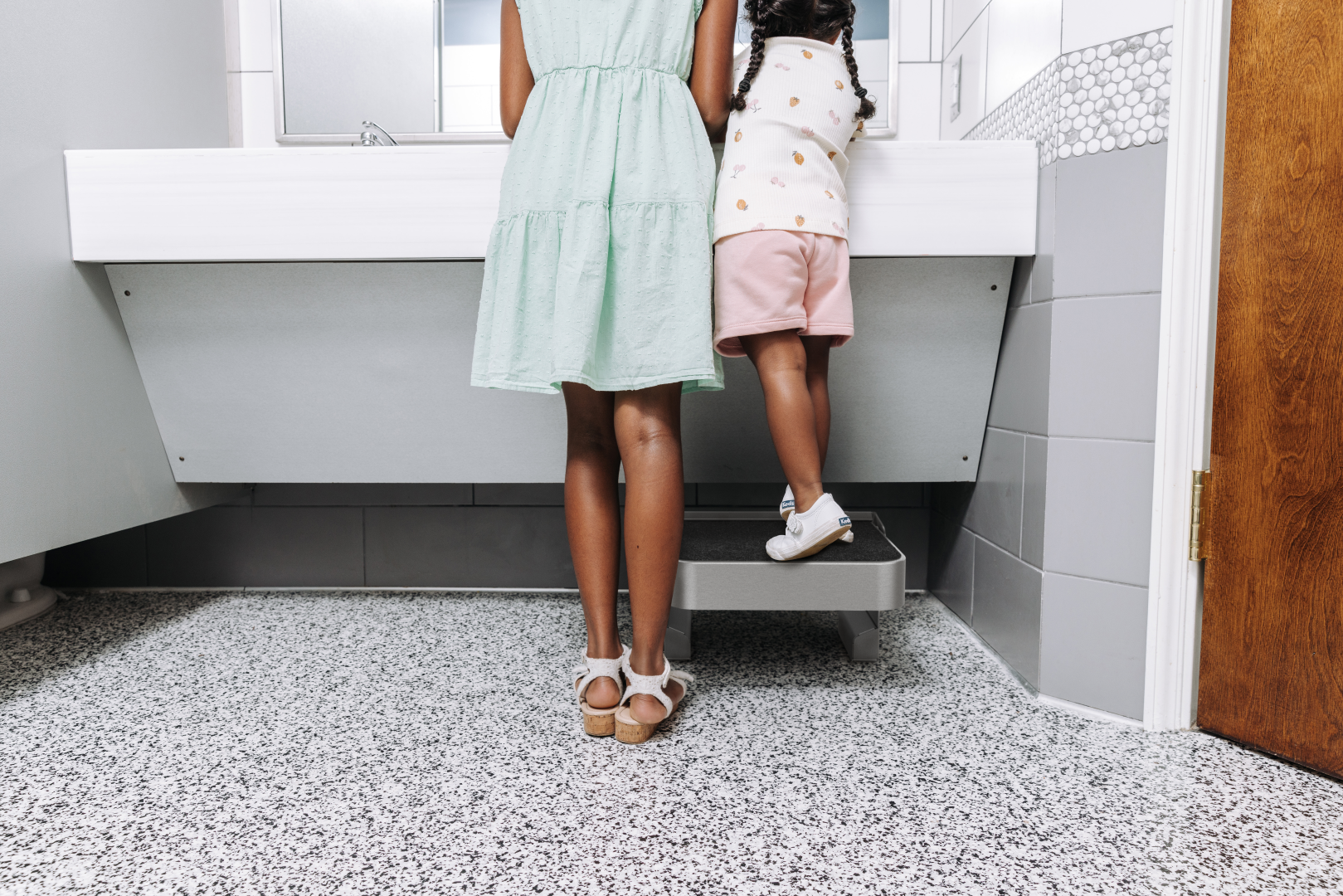
Step 'n Wash step stool. Step 'n Wash is a sponsor of The Accessible Handwashing Initiative.
Ready to do something about it?
Take Action